Calculator · rates checked 2026-11-09What it really costs
to buy from Japan
Short answer: most goods made in Japan now pay 12.5% US duty in total. Kitchen knives are the exception at about 31.1%, because they are steel articles. Green tea and books stay duty free. On top come shipping (EMS to the US starts at ¥3,900 for 500 g), a customs processing or registration fee and, if you buy through a proxy, Japan’s consumption tax (10%, or 8% on food) and the proxy’s fees. A shop that exports to you usually charges neither. Your landed cost is the sum of all of it: everything you pay until the parcel reaches your door.
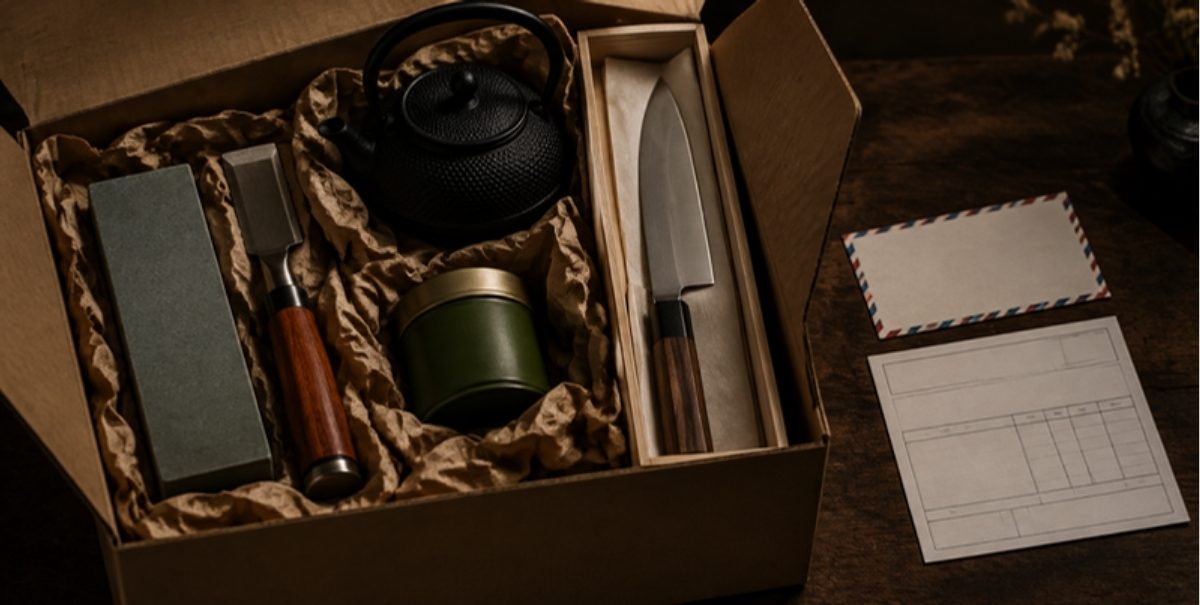
 Landed cost calculator
Pick the item, type the price as Japanese stores show it (tax included), and the calculator lines up three ways to buy: a Japan shop that ships abroad (Japan’s tax removed), a proxy service (tax included, plus its fees and shipping inside Japan), and, if you enter a price, a US shop. Shipping fills in from Japan Post’s EMS table by weight; replace it with the shop’s quote if you have one.
 US duty by item: free, 12.5% or about 31.1%
Since July 24, 2026 goods of Japan have their own line in the US tariff schedule, the HTS (Harmonized Tariff Schedule, the US list of tariff codes). If the regular duty on an item is below 12.5%, an additional duty brings the total to exactly 12.5%; if it is 12.5% or more, only the regular duty applies (HTS 9903.05.48–.49, explained in U.S. note 52(k), one of the notes to Chapter 99 that set these extra tariffs). Two groups are carved out. Steel and steel derivative articles (goods made of steel that are named on the steel tariff’s list) pay the Section 232 tariff, the US tariff on steel, instead, which for a kitchen knife means the regular duty plus 25%. A list of other products, which includes green tea, and informational materials such as books keep only their regular duty, which for both is free. We read each item’s line in the 2026 HTS Revision 22, in force from October 30, 2026.
| Item, HTS code and why | Regular duty | Total from Japan |
|---|---|---|
| Kitchen knife (wooden handle)HTS 8211.92.90.30 · Listed as a derivative steel article, so the 25% Section 232 tariff is added to the regular duty and the 12.5% Japan rate does not apply. | 0.4¢ each + 6.1% | 31.1% |
| Whetstone (synthetic or natural)HTS 6804.22 / 6804.23 · Not a steel article; the regular duty is below 12.5%, so the total becomes 12.5%. | Free (resin-bonded: 5¢/kg + 2%) | 12.5% |
| Woodworking chisel or plane (nomi, kanna)HTS 8205.30 · Heading 8205.30 is not on the derivative steel list (unlike kitchen knives), so the Japan rate applies: 12.5% in total. | 5% or 5.7% | 12.5% |
| Japanese pull saw (nokogiri)HTS 8202.10.00 · Hand saws are not on the derivative steel list; with a free regular rate the total is 12.5%. | Free | 12.5% |
| ScrewdriverHTS 8205.40.00 · Not on the derivative steel list; 6.2% is below 12.5%, so the total is 12.5%. | 6.2% | 12.5% |
| Ratchet handle or socket (socket wrench)HTS 8204.20.00 · Socket wrenches (8204.20) are not on the derivative steel list; 9% is below 12.5%, so the total is 12.5%. | 9% | 12.5% |
| Pliers or nippersHTS 8203.20.60 · Not on the derivative steel list; the regular rate works out well below 12.5%, so the total is 12.5%. | 12¢/doz. + 5.5% | 12.5% |
| Cast-iron teapot (tetsubin or kyusu)HTS 7323.91 / 7323.92 · Cast-iron kitchen articles are not on the derivative steel list (stainless and enameled steel ware are), so the total is 12.5%. | 5.3% (unenameled) / free (enameled) | 12.5% |
| Matcha or green teaHTS 0902.10.90 · Green tea is on the list of products excluded from the Japan tariff (U.S. note 52(b)), so it stays duty free. Food needs an FDA prior notice. | Free | Free |
| Fountain penHTS 9608.30.00 · The regular rate is below 12.5%, so the total becomes 12.5%. | 0.4¢ each + 2.7% | 12.5% |
| Digital cameraHTS 8525.89.40 · Cameras are not excluded from the Japan tariff, so a free regular rate becomes 12.5%. | Free | 12.5% |
| Camera lensHTS 9002.11.90 · The regular rate is below 12.5%, so the total becomes 12.5%. | 2.3% | 12.5% |
| Model kit or figureHTS 9503.00.00 · Toys and scale models are not excluded, so a free regular rate becomes 12.5%. | Free | 12.5% |
| Skincare or cosmeticsHTS 3304.99.50 · Not excluded, so a free regular rate becomes 12.5%. | Free | 12.5% |
| Book or mangaHTS 4901.99.00 · Publications are informational materials, excluded from the Japan tariff (9903.05.92), so they stay duty free. | Free | Free |
The surprise for most buyers is the gap between a knife and a chisel. Both are blades of Japanese steel, but only kitchen knives (with a short list of other metal goods such as vises, bolt cutters, some circular-saw blades and kitchen ladles) are on the derivative steel list in U.S. note 16. Chisels, planes, screwdrivers, pliers and hand saws are not, so they pay the 12.5% Japan rate. Classification is decided by US Customs and Border Protection for each entry; the codes here are the usual ones for these goods.
 Why a proxy costs more than a shop that ships abroad
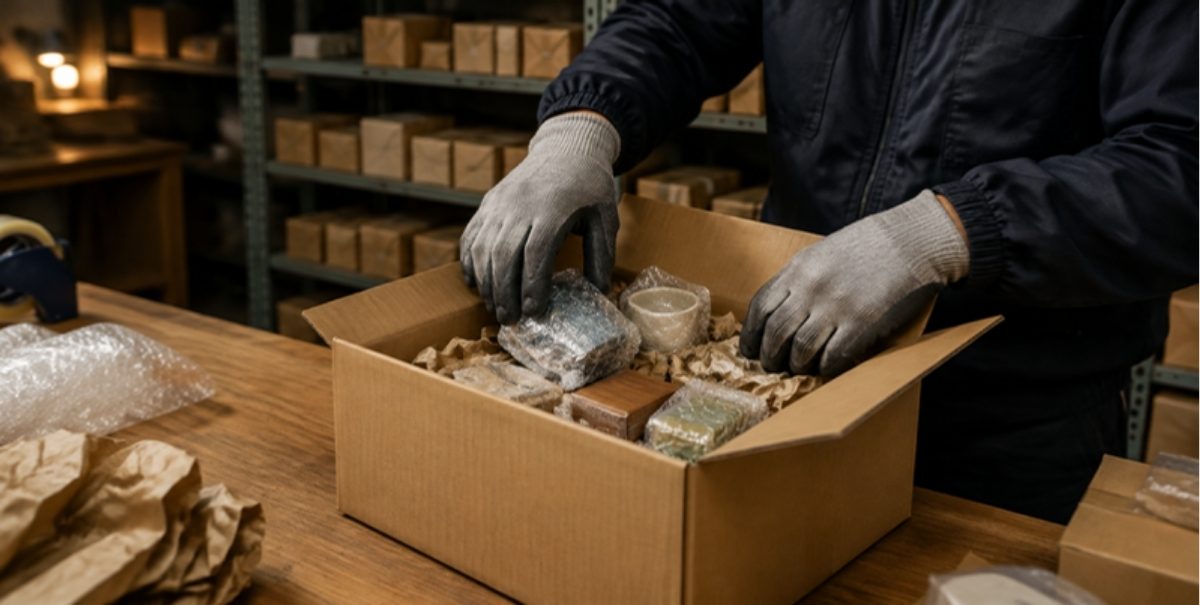
A proxy (also called a forwarding or shopping service) buys from a Japanese store on your behalf, receives the item at its warehouse in Japan and ships it on. That makes almost anything buyable, including flea-market and auction listings, but the item is bought inside Japan: you pay the shop’s tax-included price, the shop’s shipping to the warehouse, and the proxy’s fees. A shop that sells for export can take Japan’s 10% consumption tax off, because exports are exempt. Buyee and ZenMarket both say their item prices include the consumption tax.
| Service | Fees on one product | What the fee page says |
|---|---|---|
| Buyee (Standard plan) | ¥1,000 | ¥500 purchase fee per order + ¥500 Standard plan (insured delivery and inspection). The Lite plan is ¥0. |
| Buyee (Lite plan) | ¥500 | ¥500 purchase fee per order, no delivery compensation or inspection. |
| ZenMarket | ¥500 + 1% deposit fee | ¥500 per item at Amazon, Rakuten and most stores (¥300 at its recommended stores, ¥800 for Mercari and auctions), plus a deposit fee from 1%. Consolidation and insurance under ¥5 million included. |
| Neokyo | ¥850 | ¥350 per item + ¥500 packing fee for packages under 2 kg (more above 2 kg). |
Fees from each service’s own fee page on November 9, 2026. Shipping inside Japan is extra: Buyee says it generally ranges from ¥150 to ¥1,500 per order. Buyee also charges a ¥2,800 customs clearance commission on items worth over ¥200,000 sent by Japan Post. We are not affiliated with any of these services.
 Shipping to the US: EMS by weight
Japan Post’s EMS puts the US in its own zone (Zone 4). The published table runs from ¥3,900 for 500 g to ¥7,900 for 2 kg, and it includes tentative extra charges. Couriers such as DHL, FedEx and UPS publish their own rates and add a processing fee when they pay the duty for you; DHL Express lists a minimum of $17.50, which is the calculator’s default.
Since October 15, 2026, Japan Post again accepts US-bound parcels at virtually all post offices. Parcels with goods worth up to USD 2,500 need advance registration through an approved provider (Japan Post names Zonos and SafePackage), with duties paid in advance; only documents and gifts between private individuals worth USD 100 or less are optional, until January 19, 2027. The providers charge their own fee even when no duty is due. For a shop, that fee is usually built into checkout; set the customs fee in the calculator to what the shop shows.
 Five ways to pay less
- 1Prefer a shop that ships abroad
Exports are exempt from Japan’s consumption tax (10%, or 8% on food), and there is no proxy fee. A proxy is for things a shop will not send overseas: flea-market finds, auctions, shop-only items.
- 2Put several items in one box
The customs processing fee and much of the shipping are charged per parcel, not per item, so one box of three items costs less than three boxes.
- 3Look for “duty paid” (DDP)
DDP means delivered duty paid: the shop collects the duty at checkout, so nothing is due at the door. If it is a gift, this keeps the bill off the other person’s doorstep.
 4Weigh heavy items first
Shipping is by weight: EMS to the US is ¥3,900 for 500 g and ¥7,900 for 2 kg. For a stone or a teapot, postage can cost more than the duty.
- 5Or carry it home
Personal-use goods in accompanied baggage are outside the Japan tariff, and returning US residents usually have an $800 exemption. Declare what you bought to CBP when you land. Knives go in checked bags only.
 Guides by item
- Whetstones12.5% duty, but heavy: shipping is usually the bigger cost.
 Chisels, planes and saws12.5% — not the knife rate, because they are not on the steel list.
 Matcha and green teaDuty free, but the shop must file an FDA prior notice.
- Cast-iron teapots12.5% duty and about 2 kg packed: weigh shipping first.
- Japanese kitchen knivesAbout 31.1%: the knife-only calculator with handle types and worked examples.
- Bringing it home yourselfChecked bags, the tax refund at the airport, and customs at home.
Frequently asked questions
- What is the US tariff on goods from Japan in 2026?
- For most goods made in Japan it is 12.5% in total: if the regular US duty is below 12.5%, an additional duty tops it up to 12.5% (HTS 9903.05.49 and U.S. note 52(k) to Chapter 99). Goods whose regular duty is 12.5% or more pay only the regular duty. Steel articles such as kitchen knives are excluded from that rate and pay the 25% Section 232 tariff on top of the regular duty instead, about 31.1% for a wooden-handled knife. Rates checked November 9, 2026.
- Why does a Japanese knife pay more duty than a Japanese chisel?
- Kitchen knives under HTS 8211.92 are on the list of derivative steel articles in U.S. note 16 to Chapter 99, so they pay the Section 232 steel tariff. Woodworking chisels and planes (8205.30), screwdrivers (8205.40), pliers (8203.20) and hand saws (8202.10) are not on that list, so they pay the 12.5% Japan rate.
- Is there still a duty-free limit for small parcels from Japan?
- No. The $800 de minimis exemption has been suspended since June 24, 2026, for courier shipments and, according to a CBP final rule published October 22, 2026 (Federal Register 2026-21600), for postal shipments too (the rest of the postal rule took effect on July 24, 2026), so even a small order is dutiable.
- I have seen 15% in the news. Why does this page say 12.5%?
- Reports from 2025 often quote 15%. The current US tariff schedule (HTS 2026, Revision 22) sets the all-in rate for goods of Japan at 12.5% under the Section 301 tariff that started on July 24, 2026 (HTS 9903.05.48–.49 and U.S. note 52(k) to Chapter 99). Tariffs changed several times in 2025–2026, so check the date on any figure you read.
- Do proxy services like Buyee or ZenMarket charge Japanese tax?
- Yes. A proxy buys the item inside Japan, so you pay the Japanese price including the consumption tax (10%, or 8% on food and tea), plus its fees and the shipping inside Japan. A shop that exports to you can sell without the tax, because exports are exempt.
- Is matcha duty free in the US?
- Yes. Green tea (HTS 0902.10) has a free regular duty and is on the list of products excluded from the Japan tariff, so no duty applies. Because it is food, an FDA prior notice must be filed before it arrives; shops that ship tea to the US do this.
Sources
- USITC HTS Chapter 99, U.S. note 52 (Japan: 9903.05.48–.49; (k) the 12.5% total; (b) excluded products incl. green tea; (f) steel and derivatives) — Revision 22, 2026
- USITC HTS, headings 9903.05.20–9903.05.99 (Japan rows and exclusions, incl. 9903.05.92 informational materials)
- USITC HTS, 6804.21–6804.30 (whetstones)
- USITC HTS, 8202.10, 8203.20, 8205.30–8205.40 (hand saws, pliers, chisels and planes, screwdrivers)
- USITC HTS, 7323.91 (cast-iron kitchen articles)
- USITC HTS, 0902.10 (green tea)
- USITC HTS, 9608.30 (fountain pens)
- USITC HTS, 8525.89 (digital cameras)
- USITC HTS, 9002.11 (camera lenses)
- USITC HTS, 9503.00 (toys and scale models)
- USITC HTS, 3304.99 (beauty and skin-care preparations)
- USITC HTS, 4901.99 (books)
- Japan Post: EMS rate schedule, all zones (Zone 4 = U.S.)
- Japan Post: US-bound mail accepted at virtually all post offices from October 15, 2026 (advance registration and prepaid duty up to USD 2,500)
- Buyee: fees and payments
- ZenMarket: fees
- Neokyo: fees
- National Tax Agency (Japan): consumption tax exemption for exports
- 21 CFR 1.277: scope of FDA prior notice for imported food
- DHL Express (US): customs services and duty-tax processing fee
- USITC HTS, 9903.82.09 (Section 232: applicable duty + 25%)
- USITC HTS Chapter 99, U.S. note 16 (knives under 8211.92 listed as derivative steel articles; Revision 22, 2026)
- Federal Register 2026-12669: suspension of de minimis for postal shipments
- CBP final rule 2026-21600 (published October 22, 2026): postal de minimis suspension and compliance date extended to January 20, 2027
Rates and fees checked November 9, 2026. Tariffs change often in 2026; we re-check this page at least every three months and whenever a new proclamation is published. Estimates only, not customs advice.